Scary Handmade: A Sweet and Versatile Display Font for Branding
There’s something oddly satisfying about opening a blank brand board and staring at it for a few minutes. It’s not the silence that’s comforting—it’s the anticipation of what could be. That’s when I decided to test Scary Handmade on a new boutique identity project. The font arrived with a friendly energy, and I immediately felt drawn to its playful character. It’s not just another display font; it’s a personality in itself.
A Font with Personality
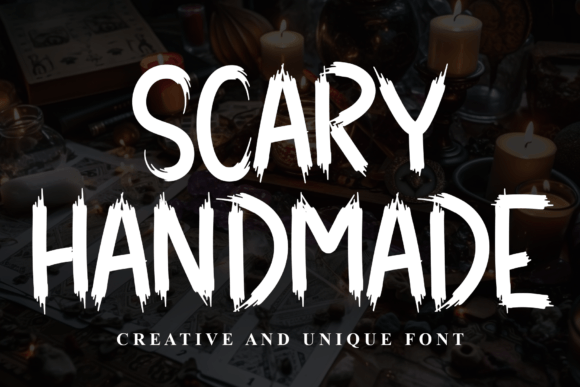
Scary Handmade is a sweet and friendly display font that manages to balance cuteness with approachability. Its rounded edges and soft curves give it a handcrafted feel, as if it were written by someone who genuinely cares about the message they’re conveying. The letterforms are well-proportioned and have a gentle, whimsical vibe that makes them stand out without being overwhelming.
What I love most about Scary Handmade is how it feels like it belongs in a variety of contexts. Whether it’s used for a wedding invitation, a handmade shop sign, or a social media post, it carries a sense of warmth and charm that can make even the most straightforward text feel special.
Testing Scary Handmade in Real Design Work
I first used Scary Handmade on a logo concept for a local bakery. The client wanted something that felt cozy and inviting, but also had a bit of character. Scary Handmade fit perfectly—its playful nature matched the brand’s personality, while its readability made it suitable for both signage and packaging.
I also tested it on a product label for a skincare line. Here, the font worked as an accent piece, adding a touch of personality without overshadowing the product information. On a business card, it added a friendly tone that contrasted nicely with the more formal sans serif body text.
One of the standout features of Scary Handmade is its versatility. It works well in both digital and print formats, which is a big plus for designers who need fonts that can adapt to different mediums. I found it particularly effective in web design, where it brought a fresh and modern feel to homepage headers and social media graphics.
Font Pairing and Design Flexibility
When pairing Scary Handmade with other typefaces, I found that it plays well with both serif and sans serif fonts. For a more elegant look, I paired it with a classic serif font like Garamond for body text, using Scary Handmade for headlines and accents. For a more contemporary feel, I combined it with a clean sans serif like Montserrat, creating a balanced contrast that highlighted the font’s charm.
The font also includes several styles and alternates, which adds to its flexibility. Swashes and ligatures can be used sparingly to add visual interest without losing clarity. This makes it a great choice for short phrases, logos, and decorative elements.
Limitations and Considerations
While Scary Handmade is a delightful font, it’s not without its limitations. As a display font, it’s best suited for headlines, logos, and short text. Using it for long body copy or small sizes can lead to readability issues. I’ve seen cases where the font becomes too cute for formal corporate use, so it’s important to consider the context before committing to it in final designs.
Another thing to keep in mind is the font’s licensing. Always check the commercial font licensing terms before using it in client work, especially for branding projects, packaging, templates, or merchandise. Some fonts have restrictions on usage in print-on-demand products or digital assets, so it’s better to be clear from the start.
Final Thoughts on Scary Handmade
Scary Handmade is a font that brings joy to design work. It’s not just a tool—it’s a mood. Whether you’re working on a boutique identity, a café refresh, or a handmade shop branding project, this font has the potential to elevate your visuals with its unique charm and versatility.
If you’re looking for a display font that can add a fun and friendly touch to your branding, Scary Handmade is worth considering. Just remember to test it in real-world scenarios before finalizing your design, and always double-check the licensing to ensure it meets your project’s needs.